Slave Labor in workforce A.B.A.
This A.B.A. barracking was run by a noncommissioned
officer of the regular army who was our commandant,
subject to the concentration camp Kaiserwald. But I
must observe that this army soldier was often worse in
his treatment of Jews than an SS guard. The work in the
army clothing department was like this:
All military uniforms of the dead from the Eastern Front
was sent to Riga. There they were disinfected, sorted by
us, washed, and repaired, so that it could be issued
again. Enormous efforts were required, and all really
gave their best. This contributed much to the long
survival of this work detail.
But even here there was turmoil despite the hard labor:
after barely fine months the children which had been
saved through hiding on November 2 were taken away
and sent to an unknown fate.
It was horrendous to witness these scenes, and they
reminded us what might have happened to our own
children. This thought pained us constantly, since we had
learned that in Holland, too, all Jews had been deported.
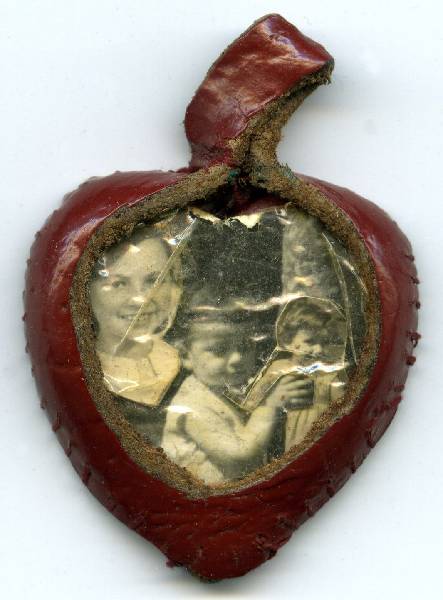
Lilly wore this medallion with
small pictures of the beloved,
yet painfully missed children
during the whole time of her
captivity on her body. The
locket was made of a small
piece of leather in the ghetto.